Showing posts with label Art. Show all posts

Sunday, January 30, 2011

EMERSON ON COUTURE

"Love of beauty is Taste. 
The creation of beauty is Art."
-Ralph Waldo Emerson

.spring couture.


...


...


...


...


...


/Asada wood block print, Pagoda and Cherry Blossoms + Givenchy Spring 2011/ 
/Steven N. Meyers Parrot Tulip I + Dior Spring 2011/ 
/Mark Rothko Green White and Yellow on Yellow + Dior Spring 2011/ 
/Pablo Picasso Sketch for The Demoiselles d'Avignon + Dior Spring 2011/
/Georgia O'Keeffe White Flower + Givenchy Spring 2011/

Thursday, February 18, 2010

C is for Cute

I came across a darling book this week - it's a fashion alphabet, called When Royals Wore Ruffles. The illustrations, by Chesley McLaren, are wonderfully whimsical. McLaren is no stranger to fashion - she's sketched looks from Chanel to McQueen, and her work has been featured by Henri Bendel, Express, and Estee Lauder. And, she illustrated Town and Country's Social Graces. Need I say more? (SUCH a T&C fan!) Without further ado, a sampling of her illustrations (see below for book information).
All images, Amazon.com. To purchase, visit When Royals Wore Ruffles: A Funny and Fashionable Alphabet!

Wednesday, September 2, 2009

Milledgeville and the Architecture of the South

One of my favorite reads, Style Court, had a wonderful post recently about the little town of Milledgeville, GA, and upcoming exhibits at Georgia College. I visited Milledgeville earlier this summer, and the town itself is a carefully staged exhibition: row upon row of columned homes, framed in brick walks and languid trees. Just about an hour South of metro Atlanta, it's worth a day trip when you're next in the South's megalopolis. Be sure to take your camera.

Map, here. Visit my post on Milledgeville for more pictures and history.


P.S. While in Milledgeville be sure to visit Flannery O'Connor's Andalusia. Read about the history of her farm and home here.

All images, my own. Do not copy without permission.

Thursday, August 6, 2009

We Are Very Sorry: Our Art is Currently Offline.

I'm fascinated by modern (as in current) art- fascinated, and not infrequently, horrified. It's difficult to make peace with an era of expression so enraptured with themes of destruction, decay, and depression (the "D" era of art, I suggest we call it). While thought provoking, it isn't always comfortable - but it IS nearly always serious. Which is why I find "art gone wrong" to be so wholly amusing. High-tech art is especially prone to these fits of lucidity, when technology fails and humor inadvertently pokes through. Here's a favorite, Jenny Holzer for the Smithsonian American Art Museum.  When I visited, I expected to see this:

A giant bug zapper!

But what I actually saw was this:

Oh wait... there's a sign.
"The artwork has been temporarily turned off for maintenance. We regret any inconvenience"

But, not to pick on Jenny, I really enjoyed her light projection show at the opening of the 2007 Kennedy Season (the words from JFK's speeches were inscribed in light across the Potomac and Virginia shore). But, I do have to raise a question.  Art for art's sake is our motto today, although, historically, that's a rather new idea. It's taboo to ask:  is it really worth it?  But museums and curators have lately begun to ask that very question in ernest. For one, maintaining tech art is difficult (and astronomically costly) - what happens when it becomes necessary to have computer technicians and technology specialists on staff for just a few pieces? Especially since the technology and its components are nearly obsolete at the moment of acquisition. Attempting to replace a motherboard is hardly the same as repairing damaged canvas (the time may be the same; the ease of obtaining or creating materials is not). 

Or, what happens if the memory fails? The file's corrupted?  NPR reporter Laura Sydell asks:  "how long will those backups last before they're obsolete? ...the downside is that the Web site must be constantly maintained. One advantage of contemporary artwork is that the artists are usually still alive." But what happens when the artist dies? Museums are finding out the hard way. 
Hanson, "Lady With Shopping Bags"

Take, for instance, artist Duane Hanson's work in the Wallraf-Richartz Museum in Germany. When curators noticed his plastic sculpture of a woman entitled "Woman With Handbag" beginning to crack and crinkle, they simply asked Hanson to age her a bit, as if the decay were natural. Hanson passed away in 1996, however, and his artwork is now aging with decidedly less grace:  it's on limited display. Plastic, once thought to be the new "Grecian marble" is proving inherently unstable and unpreservable. 

So what should museums do with expensive art pieces that they can't maintain and thus can't show? Even worse:  what if these decaying subjects damage the other art around them? Sam Kean writes an interesting article on this problem, and notes:  "Often the only clue a plastic is degrading is its odor. Some begin to smell like ammonia or take on a sickly new-car smell. PVC weeps chlorine, giving it a swimming-pool smell, and any plastics with acetate eventually give off whiffs of acetic acid, which is found in vinegar. Other plastics are redolent of burnt milk, burnt hair, celery, cinnamon, raspberry jam, or camphor "muscle rub." Worst of all, when plastics weep and bleed they can corrupt everything around them. Chemicals evaporate from their surface and acidify any moisture inside a display case. This causes mini bouts of acid rain that in turn eat away at the plastic in nearby objects—as well as any cloth, metal, or paper in those objects."

Smelly art? High-brow stuff isn't exactly supposed to be scratch 'n sniff. One possible solution is to simply give in. Don't bother expecting it to last. Biodegradable art or temporary installations may be the wave of the future. Unfortunately, when the next generation comes along, they won't have as much to be inspired by. 

Temporary...

Video of the Leo Villareal's entrancing light instillation in the National Gallery of Art's East Wing tunnel. The instillation, consisting of LED lights and controlling technologies, is currently considered a temporary exhibit.

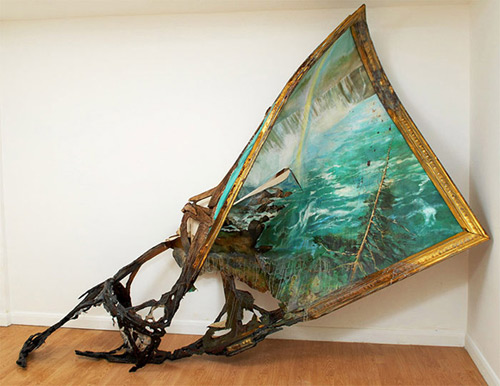
Or pre-destroyed?

Valerie Hegarty's art:  not even trying.

Hanson image: http://www.thecityreview.com/s01ccon1.html
Valeria Hegarty:  http://www.booooooom.com/2008/12/05/valerie-hegarty/

Tuesday, July 28, 2009

New Mexico Museum and Jozef Bakos

A recent issue of Architectural Digest brought the Museum of New Mexico store to my attention. They're offering beautiful patterned tiles (or trivets, but I dislike that word because it confines a flexible decorative object to the kitchen). The tiles are decorated with artworks by prominent New Mexico painters or Navajo patterned rugs.

Springtime Rainbow, by Jozef Bakos.


A tile with an Arape Style Navajo rug design.


Santuario de Chimayo, New Mexico.

I was unfamiliar with the work of artist Jozef Bakos (1891 - 1977), so I decided to investigate further. Bakos was originally from Buffalo, NY, and was a member of "Los Cinco Pintores," an avant garde painting group in Santa Fe. He was also a professor at the University of Denver, a carpenter, and a furniture maker.

Jozef Bakos, Sunmount

Jozef Bakos, Sun Mountain

Jozef Bakos, Kitchen Interior

Images, jozefbakos.com, matthewchaseltd.com, askart.com.

Thursday, July 9, 2009

Ballets of the World in Photos

Ooooohhhh!!!! When I saw these images from the NY Post, I couldn't help but be delighted. I love ballet, and behind-the-scenes ballet is even better. There are so many terribly sappy images out there of ballet shoes, ribbons, and roses... . I really enjoy unusual views of this art.
The storage room at the NYC Ballet. Aren't these colors lovely?

Vintage embroidery for a dress for an upcoming production. The embroidery is valued at around $900.

Some other favorites...
Les Grands Ballets Candiens de Montreal. An abstract time-lapse photo.

An old poster from the National Ballet of Canada - ballet goes gritty. Love the creativity. 

The Ballet De Havana.

The American Ballet Theater captured on the beach in Caracas.

Last, but not at all least, one of my favorite ballet images of all time:  this exquisite, open air setting of Swan Lake by the American Ballet Theater. 

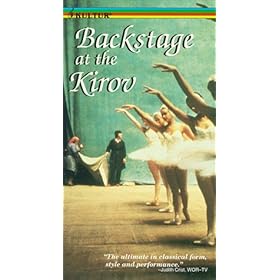
Finally, for a cinematographic masterpiece on ballet, the documentary Backstage at the Kirov is a must. Tchaikovsky's score intertwines with images of Cold-War era Russia, sweeping on-stage views of Swan Lake, ballet history, and high drama, as the next Odette for the opening of the Kirov season is chosen. Available at Amazon.com.

Pictures 1&2:  NYMag.com. Pictures 3-6, Flickr.com. Image 4, ABT ad, my files. Image 5, amazon.com.

Wednesday, July 1, 2009

Artist Maira Kalman at Monticello

Thomas Jefferson's brick and mortar autobiography was Monticello:  43 rooms in the Roman neoclassical style. In a recent edition of the New York Times, artist and illustrator Maira Kalman created a picture story on Thomas Jefferson and his beloved Monticello, called The Pursuit of Happiness. Here are a few of her lovely illustrations, as well as some historical tidbits on design. Be sure to visit her blog for the entire story.
THE PARLOR:  Jefferson was ever the apt designer, and he frequently made up what he couldn't buy or find to his liking, such as the pattern on this parquet floor. He also created the automatic double doors visible on the left side of the room (when one door was opened or closed, the other followed in mirror fashion). If you're excessively curious, and enjoy watching tourists awed by a door shutting, click here for the video. Jefferson played violin very well, and liked to perform in this room with his little grandchildren dancing around him. 

JEFFERSON'S BEDROOM:  TJ invented the triple sash window, thus becoming the hero of generations of height-averse housekeepers. He also invented several of the items visible in Kalman's illustration - including the multi-book reading stand (left side), for your on-the-go senior statesman who doesn't have time to use bookmarks. His bed is in an open alcove, with a little ladder on one side for accessing handy storage up above. The practical Mr. Jefferson was able to function entirely out of one space, with equal ease in working or sleeping. 

THE FOYER, as rendered by Kalman. This is not, as it looks to modern eyes, a trophy hall (although it was that too). This was a museum of the Americas. The instigator of the Lewis and Clark expedition and author of Notes on the State of Virginia had many prominent foreign guests to his home, and his personal museum proved to many doubtful European eyes that variety and profit abounded in the New World. Keep in mind there was then no Smithsonian, no Guide to American Wildlife, and that the hapless discoverer of the Platypus was labeled a fraud. 

A room Thomas Jefferson designed. Do we have any cause to doubt the aesthetic talent of our founding fathers? Today's average politician constructs pork barrels, not buildings.
Images: Monticello, monticello.org. Maira Kalman images via the nytimes.com.

Monday, June 29, 2009

Trompe L'Oeil

It's a stunningly beautiful day in Alabama. Earlier this morning, I snapped this pic on my new blackberry of a lovely configuration of mare's tails. They look a bit like jellyfish trailing tenticles to me though... maybe I'm overdue for a trip to the beach?
I'm very fond of using elements from nature in decorating, and far from finding it cheesy, I love a trompe l'oeil ceiling with clouds. If well done (think: opposite of Vegas), a cloudy ceiling brings a little of the outdoors, in.

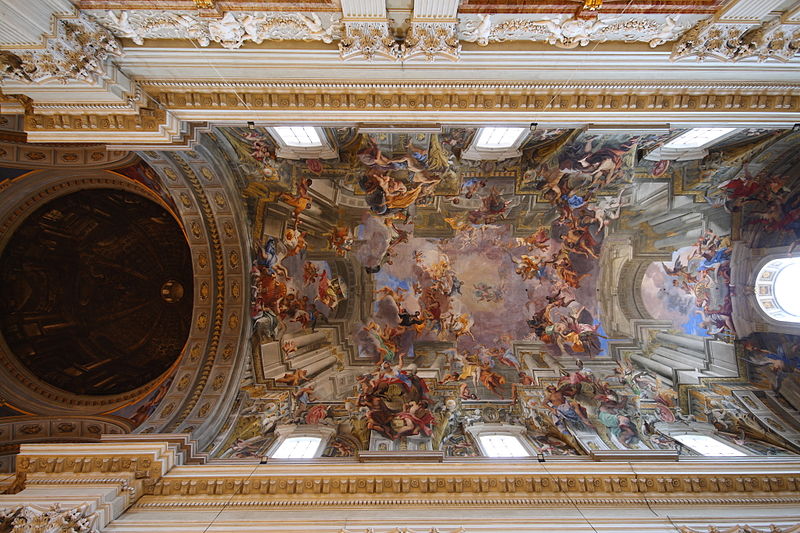
The art of trompe l'oeil dates back to Greek times, and figures among the Greek mythology:  "A legendary contest is remembered between two ancient Greek painters, Zeuxis and Parrhasius. They challenged each other to produce the most realistic painting. Zeuxis painted grapes which the birds flew down to try and eat. Then, Zeuxis asked Parrhasius to draw back the curtains on his painting. Parrhasius knew he had won because the drapes were part of the painting." - Rebecca Abel, Brown University. By far the most beautiful examples of this art are found in the churches of Rome. This exquisitely rendered ceiling of Sant Ignazio was painted by Andrea Pozzo around 1685. The ceiling is completely flat, including the dome. The effect in real life is indescribable - the figures above seem to bend toward you, and their expressions alter in the light.

St. Peter's Basilica and the Sistine Chapel are of course the most well known ceilings, but glorious examples are found throughout the Vatican. In this hallway, an unadorned ceiling appears to be intricately plastered and carved.

This tradition later made its way to America, quite literally in the case of the library at Biltmore, which was imported from an Italian Villa in strips and then reinstalled on the ceiling. Constantino Brumidi brought the ceiling mural to government; below, the interior of the U.S. Capitol dome, depicting the Apotheosis of Washington (surrounded here by some picturesque clouds and the original 13 colonies, represented as maidens). The square pattern around the mural is not trompe l'oeil (literally: "fool the eye"), but impressed steel, painted to compliment the mural. It too has an Italian model:  the Pantheon.

Trompe l'oeil is still alive and well today. Here's chalk artist Julian Beever's highly amusing street work - the sidewalk is still there, but notice how the pedestrians are skirting it anyway.

And if you're feeling VERY daring and want to pick up a brush yourself, try The Art of Faux
Credits: Sant Ignazio, Wikipedia. Vatican Hall, About.com. Capitol Ceiling, aoc.gov. Julian Beever's work, sharenator.com.